
Constipation is common with up to 27% of the US population experiencing chronic constipation. Many people have a general idea on how to manage their constipation and understand that diet and exercise are key, but most don’t understand how to tailor these general concepts to their individual circumstance.
With so much information available out there to self-diagnose and endless supplements to self-treat constipation, it can be confusing to know what may work best for you. Many people try dozens of different products with minimal relief.
Constipation experienced chronically is not only frustrating, it can have detrimental impact on mood and mental health. If not managed appropriately, constipation symptoms can worsen over time and may lead to further pelvic floor dysfunction symptoms.
I like to explain to my patients that every one has their perfect recipe for a satisfactory bowel routine and I am here to help you figure out what the recipe is.
Here are the main INGREDIENTS:
- Diet:
- We focus specifically on FIBER and FLUID. Adequate fiber and hydration are KEY for creating an ideal stool consistency that is easy to pass without excessive straining or time spent on the toilet (should be no more than 5 minutes).
- Stool consistency is influenced by diet, medications, stress, and certain medical conditions.
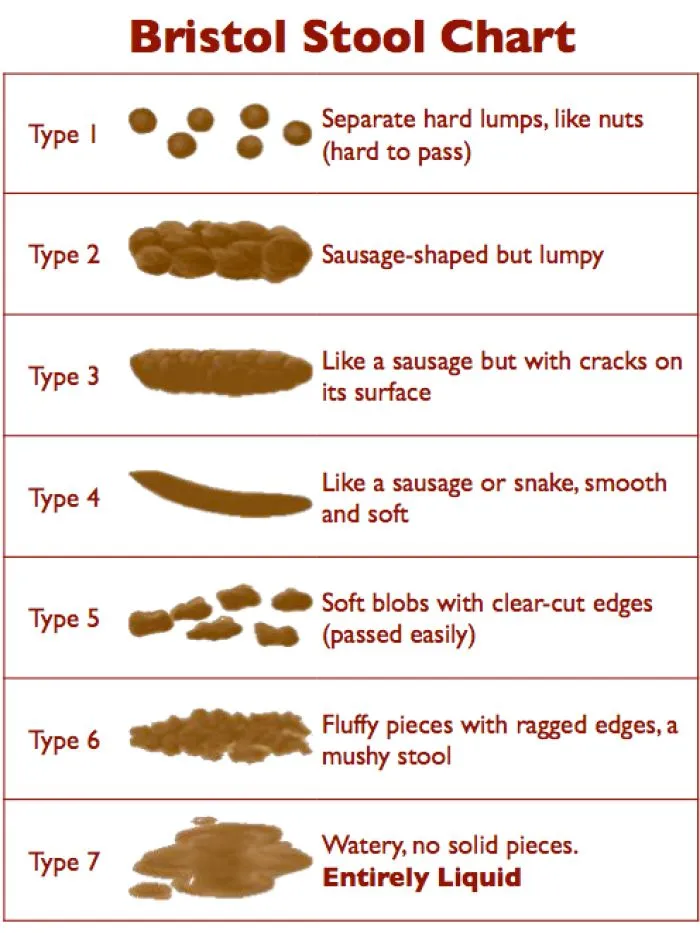
- The chart below depicts the types of stool consistency- healthy would be a type 3 or 4. Either extreme makes it difficult to empty satisfactorily.
- A pelvic floor therapist can give you general diet and supplementation advice to help develop an ideal stool consistency.
- Exercise: Hugely important for bowel health – keeps things moving along the tract!
- Cardio increases blood flow and speeds digestion.
- Targeted stretches for the abdomen and pelvic floor can relax the muscles and improve ease of bowel movements.
- A pelvic floor therapist can assign specific exercises and stretches to help relax your pelvic muscles.
- Pelvic Floor and Abdominal Muscles Function:
- Ideally, no excessive straining is necessary for a healthy bowel movement.
- Healthy, coordinated pelvic floor and abdominal muscles are responsible for easy bowel movements.
- Muscles that are too tense or unable to relax can make it difficult to empty.
- A pelvic health therapist is uniquely trained to assess how these muscles may be affecting your constipation symptoms and help you improve their function.
There are many other ingredients that I might discuss with patients, but these are the main ones. Managing your constipation is about striking the right balance of all these elements. If you think there might be room for improvement in your bowel routine, don’t hesitate to seek help.
Shana Hoke
Pelvic Health Physical Therapist at Better With PT
betterwithpelvichealthpt.com